
 Image 1 of 1
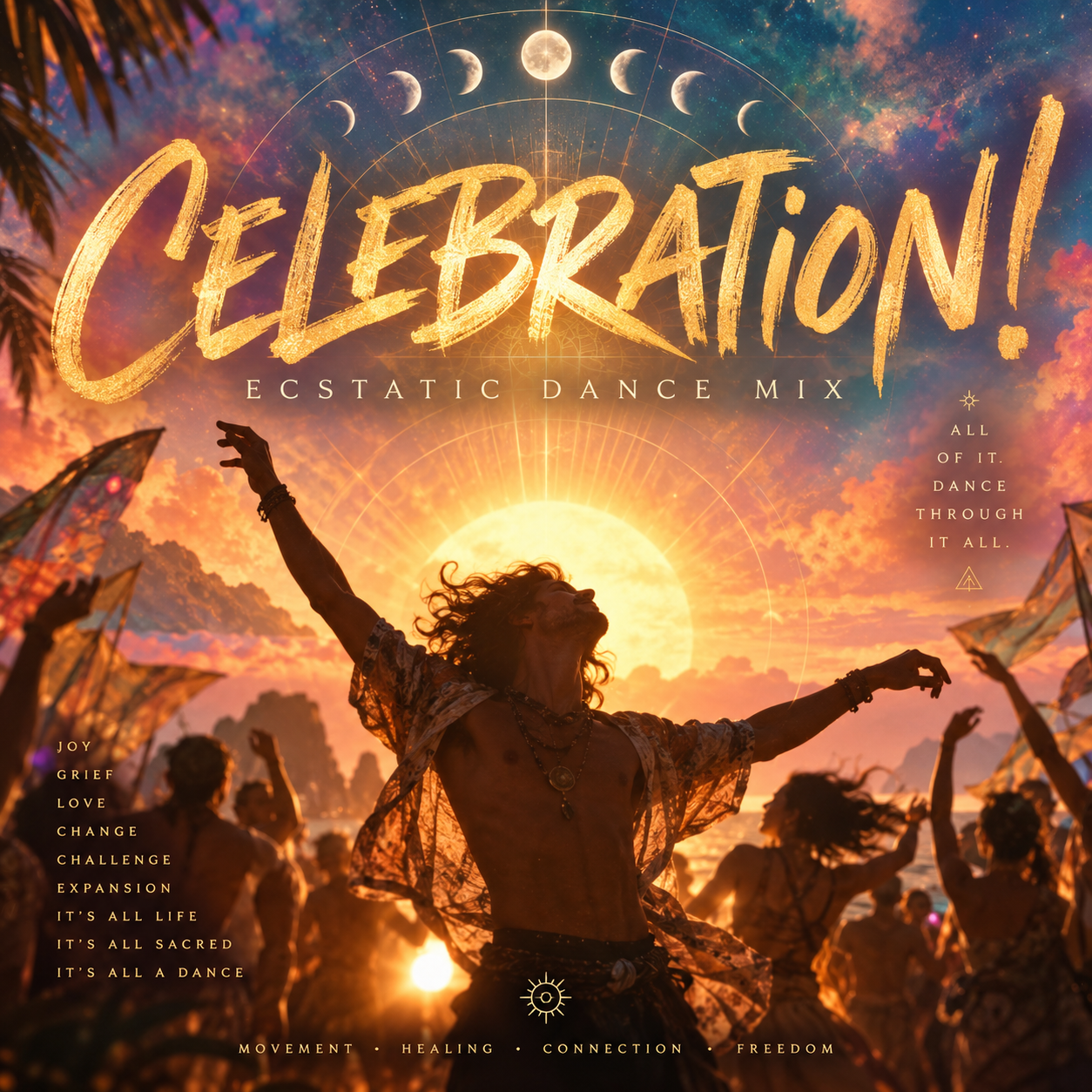
Celebration (ecstatic) Angel Dance Mix
Celebration
BPM: Starts 100 → builds to 135 Duration: 45–60 minutes Mood arc: Quiet invitation → warm groove → ecstatic peak → tender landing
Tracklist & Flow
Opening Breath (100–105 BPM) — 4–6 min
Soft field recordings, low shakers, breath loop. Sparse piano motifs; gentle heartbeat bass. Purpose: ground the room, invite presence. Allow people to arrive in body.
Sunrise Steps (105–110 BPM) — 5–7 min
Subtle percussive groove, mellow synth pads, organic flutes. A sense of curiosity and opening. Encourage small movements, footwork, gentle sways.
Joyful Curiosity (110–115 BPM) — 6–8 min
Warm congas, playful marimba, bright vocal chops. Melodic lines rise and fall like laughter. Energy lifts; smiles begin to spread. Invite exploration and lightness.
Edge & Embrace (115–120 BPM) — 6–8 min
Minor tonality with a steady kick, deep toms, grainy strings. Themes of tension and release. Use call-and-response vocal samples that suggest challenge and reassurance. Purpose: acknowledge difficulty, find the dance in it.
Heart Open (120–125 BPM) — 5–7 min
Major-key shift, wide pads, breathy choir. Melodic hook that repeats and deepens. Encourage expansive movement—arms open, chest forward. This is acceptance made visible.
Wild River (125–130 BPM) — 6–8 min
Driving percussion, syncopated bass, bright acid stab accents. Fast-moving, playful, slightly reckless. Peak begins to approach. Invite dancers to let go, to move with abandon.
Peak: Celebration (130–135 BPM) — 4–6 min
Full-spectrum energy: soaring synth leads, layered vocal exclamations, clapping, euphoric chord progression. Release and ecstatic joy. This is the culmination—dance through sorrow, through joy, through life.
Gentle Return (115–120 BPM) — 4–6 min
Slow the pulse with warm cello swells, soft beats, and a steady tribal tom. Integrate the peak energy into grounded movement. Gentle hugs, slow turns, easy steps.
Gratitude Lullaby (100–105 BPM) — 4–6 min
Minimal percussion, acoustic guitar or harp, distant chanting. Create space for reflection and melting down. Lead people into stillness, seated or lying down.
Closing Ground (60–70 BPM ambient) — 3–5 min
Low drone, Tibetan bowl, breath. Silence at the end. Simple invitation to carry the celebration home.
Guiding cues for facilitators
Begin with a short spoken invitation (30–60 sec): acknowledge the full spectrum of life—joy, grief, fear, love—and invite dancers to meet whatever is present with curiosity and movement.
Use gentle lighting transitions: warm amber at opening, brighter color at the Joyful Curiosity phase, full warm white at the Peak, dim and soft for the landing.
Encourage nonverbal leadership: move through the room, model invitation but not instruction. Offer moments where people can mirror one another.
Hold space for contrast: intentionally include moments that feel heavy or unresolved to normalize them as part of the celebration.
At the close, offer a brief verbal gratitude (20–30 sec): thank everyone for showing up and for dancing through it all.
Sample short script lines (optional)
Opening: “Welcome home to your body. Breathe. Feel the floor beneath you.”
Edge & Embrace: “If a feeling rises, move with it. You are allowed to meet it with your whole body.”
Peak lead-in: “Let go here. This is your celebration—every piece of you is invited.”
Closing: “Bring your hands to your heart. Thank whatever wants to be thanked.”
Atmosphere & intention
Theme: Celebration as acceptance—honoring life’s fluctuations by dancing through them rather than escaping them.
Dress code suggestion: comfortable, expressive, layers for shifting temperature and movement.
Props (optional): mats, cushions, soft scarves for flowing movement during slower segments.
Safety: remind dancers to hydrate, listen to their bodies, and choose consent in touch.
Musical palette suggestions
Organic percussion (djembes, congas, shakers), analogue synth leads, warm low-end, breath and vocal textures, occasional acoustic instruments (guitar, flute, cello).
Use minor-to-major modal shifts to mirror movement from tension to
Celebration
BPM: Starts 100 → builds to 135 Duration: 45–60 minutes Mood arc: Quiet invitation → warm groove → ecstatic peak → tender landing
Tracklist & Flow
Opening Breath (100–105 BPM) — 4–6 min
Soft field recordings, low shakers, breath loop. Sparse piano motifs; gentle heartbeat bass. Purpose: ground the room, invite presence. Allow people to arrive in body.
Sunrise Steps (105–110 BPM) — 5–7 min
Subtle percussive groove, mellow synth pads, organic flutes. A sense of curiosity and opening. Encourage small movements, footwork, gentle sways.
Joyful Curiosity (110–115 BPM) — 6–8 min
Warm congas, playful marimba, bright vocal chops. Melodic lines rise and fall like laughter. Energy lifts; smiles begin to spread. Invite exploration and lightness.
Edge & Embrace (115–120 BPM) — 6–8 min
Minor tonality with a steady kick, deep toms, grainy strings. Themes of tension and release. Use call-and-response vocal samples that suggest challenge and reassurance. Purpose: acknowledge difficulty, find the dance in it.
Heart Open (120–125 BPM) — 5–7 min
Major-key shift, wide pads, breathy choir. Melodic hook that repeats and deepens. Encourage expansive movement—arms open, chest forward. This is acceptance made visible.
Wild River (125–130 BPM) — 6–8 min
Driving percussion, syncopated bass, bright acid stab accents. Fast-moving, playful, slightly reckless. Peak begins to approach. Invite dancers to let go, to move with abandon.
Peak: Celebration (130–135 BPM) — 4–6 min
Full-spectrum energy: soaring synth leads, layered vocal exclamations, clapping, euphoric chord progression. Release and ecstatic joy. This is the culmination—dance through sorrow, through joy, through life.
Gentle Return (115–120 BPM) — 4–6 min
Slow the pulse with warm cello swells, soft beats, and a steady tribal tom. Integrate the peak energy into grounded movement. Gentle hugs, slow turns, easy steps.
Gratitude Lullaby (100–105 BPM) — 4–6 min
Minimal percussion, acoustic guitar or harp, distant chanting. Create space for reflection and melting down. Lead people into stillness, seated or lying down.
Closing Ground (60–70 BPM ambient) — 3–5 min
Low drone, Tibetan bowl, breath. Silence at the end. Simple invitation to carry the celebration home.
Guiding cues for facilitators
Begin with a short spoken invitation (30–60 sec): acknowledge the full spectrum of life—joy, grief, fear, love—and invite dancers to meet whatever is present with curiosity and movement.
Use gentle lighting transitions: warm amber at opening, brighter color at the Joyful Curiosity phase, full warm white at the Peak, dim and soft for the landing.
Encourage nonverbal leadership: move through the room, model invitation but not instruction. Offer moments where people can mirror one another.
Hold space for contrast: intentionally include moments that feel heavy or unresolved to normalize them as part of the celebration.
At the close, offer a brief verbal gratitude (20–30 sec): thank everyone for showing up and for dancing through it all.
Sample short script lines (optional)
Opening: “Welcome home to your body. Breathe. Feel the floor beneath you.”
Edge & Embrace: “If a feeling rises, move with it. You are allowed to meet it with your whole body.”
Peak lead-in: “Let go here. This is your celebration—every piece of you is invited.”
Closing: “Bring your hands to your heart. Thank whatever wants to be thanked.”
Atmosphere & intention
Theme: Celebration as acceptance—honoring life’s fluctuations by dancing through them rather than escaping them.
Dress code suggestion: comfortable, expressive, layers for shifting temperature and movement.
Props (optional): mats, cushions, soft scarves for flowing movement during slower segments.
Safety: remind dancers to hydrate, listen to their bodies, and choose consent in touch.
Musical palette suggestions
Organic percussion (djembes, congas, shakers), analogue synth leads, warm low-end, breath and vocal textures, occasional acoustic instruments (guitar, flute, cello).
Use minor-to-major modal shifts to mirror movement from tension to